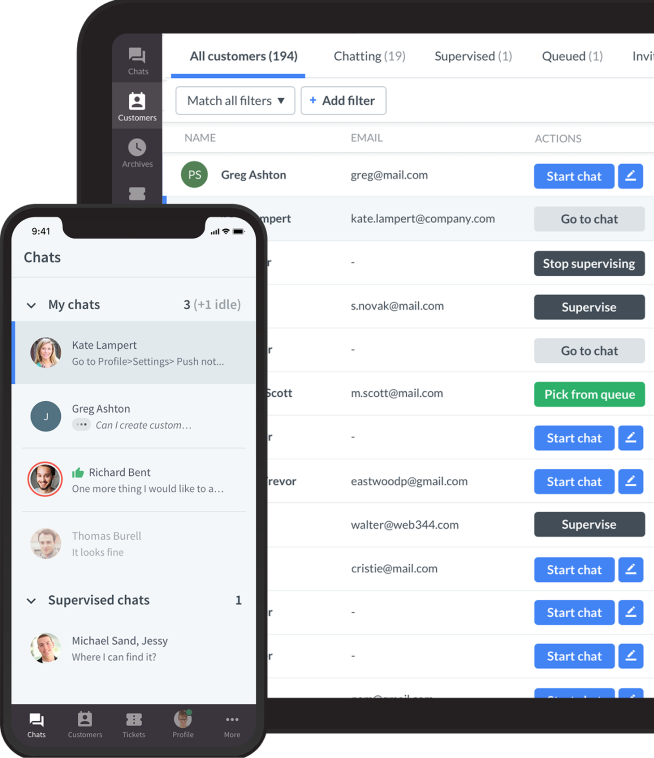


Customer service is the broader practice of helping customers throughout their relationship with a business. Customer support focuses on resolving specific questions or problems with a product or service, often through troubleshooting. The two overlap, and companies sometimes use the terms interchangeably. The useful distinction is the work being done: guiding the customer across the relationship versus getting a particular issue resolved.
Dimension | Customer service | Customer support |
|---|---|---|
Primary goal | Make interactions helpful and consistent | Resolve a specific problem or obstacle |
Scope | Assistance before, during, and after purchase | Help with using a product or service |
Typical trigger | A question, purchase, request, or follow-up | An error, access problem, setup difficulty, or unresolved issue |
Expertise | Product knowledge, communication, policies, and judgment | Often deeper diagnosis and technical product knowledge |
Common ownership | Frontline service, retail, account, or combined teams | Support specialists or a combined service team |
Timing | Both proactive and reactive | Often issue-driven, but can be proactive |
Channels | Phone, email, chat, social messaging, and in person | The same channels, plus structured troubleshooting and self-service resources |
Useful metrics | CSAT, customer effort, feedback, and retention context | Resolution time, FCR, reopen rate, backlog, and service commitments |
AI applications | Guidance, relevant recommendations, and reply assistance | Knowledge retrieval, triage, simple troubleshooting, and summaries |
These are common patterns, not fixed job descriptions. Businesses may combine the functions or use specialist teams.
What is customer service?
Customer service is the assistance a business provides to help people make decisions, complete tasks, and address concerns across the customer journey. It might involve explaining a return policy before purchase, helping someone choose a plan, or coordinating a refund afterward.
Customer service representatives explain options, clarify limits, and take responsibility for the next step. Helpful service does not require approving every request.
Customer service contributes to customer experience, but the two are not identical. Customer experience also includes the product itself, website usability, delivery, pricing, and other aspects of dealing with the company. A courteous conversation cannot by itself repair an unreliable product or confusing buying process.
What is customer support?
Customer support is assistance that helps customers use a product or service and overcome specific difficulties. It can include installation, account access, troubleshooting, error diagnosis, repairs, and guidance on an unfamiliar feature.
A support agent might ask for an error message, reproduce a problem, test a workaround, and coordinate a permanent fix with another department. Sending a reply alone does not resolve a support case.
Support is often associated with technical products, but it is not restricted to software. A retailer helping someone with a damaged item or a subscription business investigating an access failure is also providing customer support.
Customer support vs customer service: key differences
1. Scope across the customer journey
Customer service covers a broad range of customer interactions throughout the customer lifecycle. Customer support concentrates on a particular need or problem within that wider relationship.
For example, a conversation about choosing a suitable subscription is usually service or sales guidance. Investigating why the chosen subscription does not grant access is support. The second task needs diagnosis and a verified remedy.
2. Depth of investigation
Customer service teams handle customer inquiries about policies, product choices, delivery details, and account processes. Customer support teams need the right tools for technical assistance. Customer support agents may also need specialist expertise, such as interpreting logs, checking configuration, or reproducing an integration error.
This does not make one role more skilled or valuable. Helping an angry customer and explaining a difficult policy requires judgment. Diagnosing an error requires technical understanding. Many roles need both, and team training should reflect the problems customers actually bring.
3. How work begins and ends
Service can begin before someone becomes a customer. It may end with a clear answer, a completed transaction, or an agreed next step. Support usually begins with a problem and needs a resolution process, even when several people contribute.
The timing is not absolute. A prospective customer may need technical support during a trial. A support team may proactively warn customers about a known issue before they report it. “Before purchase versus after purchase” is therefore an incomplete definition of the difference.
4. Customer experience and resolution outcomes
For a service interaction, success might mean that the customer understands the options and completes the intended task with little effort. For a support case, success might mean that access is restored or a verified workaround allows work to continue.
Measure both the outcome and how it was delivered. A technically correct solution with confusing instructions can still create a poor experience. A warm conversation that leaves the original problem untouched is not a complete support resolution.
Customer service vs customer support: where they overlap
Both functions depend on customer service skills: listening, product knowledge, accurate communication, and ownership. Customers should not need to understand your organization chart to receive help.
Someone disputing an invoice may need an explanation of the policy, a technical check of the billing system, and coordination with finance. The conversation can include customer service and support without requiring the customer to open three separate requests.
Both teams also collect customer feedback for the business. Repeated questions can identify missing website information; recurring technical issues can help the product team prioritize investigation. Share those patterns with the people able to address them. Closing individual cases matters, but preventing the same avoidable problem helps future customers too.
For the skills common to both roles, see these principles of good customer service.
Examples of customer service and customer support
These illustrative scenarios show the distinction in everyday work. They are not reported customer case studies.
Ecommerce: choosing a product versus fixing an order problem
Customer service: A shopper asks an online retailer whether a jacket is suitable for wet weather. The representative helps the shopper compare the company's products by explaining specifications, sizing, and return options so the shopper can make an informed choice.
Customer support: The jacket arrives damaged. The agent collects the necessary order details, checks the available remedy, and arranges the approved replacement or refund. If checkout failed before purchase, investigating that failure would also be support.
The first conversation helps someone decide; the second resolves a problem.
SaaS: onboarding guidance versus an integration error
Customer service: A new account owner asks how to get the team started. The representative explains the setup sequence and points them to the right onboarding resources.
Customer support: The customer's integration returns an error. A specialist checks the configuration and relevant diagnostic information, identifies the cause where possible, and verifies the proposed fix or escalates with evidence.
If a customer success manager also helps define adoption milestones, that is a separate but related responsibility. Several functions can contribute to the same account.
Subscriptions: plan advice versus missing access
Customer service: A customer wants to reduce their subscription cost. The representative explains available plans, what changes, and when the new price would take effect.
Customer support: After an approved change, the customer's access does not match their plan. The team investigates the account state and coordinates correction with billing or engineering as needed.
The customer should receive a connected response, even if the second task needs a specialist with different permissions.
Customer satisfaction and customer effort score: measuring both functions
Choose key performance indicators from these customer service metrics according to the work, rather than assigning a metric exclusively to a department.
Metric | What to examine | Where it is useful |
|---|---|---|
Customer satisfaction score, or CSAT | Ratings after an interaction, with comments and response coverage | Both service and support |
Customer Effort Score, or CES | How easy customers found completing their task | Both, especially journeys involving transfers |
First response time | Time to the first substantive reply, using a defined clock | Both, where waiting affects the experience |
First Contact Resolution, or FCR | Eligible issues resolved on the first contact | Support and transactional service |
Resolution time | Time from opening a case to the defined resolution | Support and service requests requiring follow-up |
Reopen rate | Closed cases reopened within an agreed period | A check on premature or incomplete closure |
SLA attainment | Whether applicable response or resolution commitments were met | Cases covered by defined service commitments |
Escalation rate and backlog | Cases needing another team and unresolved work awaiting action | Staffing, routing, and process planning |
Average handling time measures how much time agents spend handling an interaction, according to your reporting definition. It differs from elapsed resolution time, which can include waiting for another team or the customer. Use handling time to understand capacity, rather than pressuring agents to end difficult conversations early.
Define denominators, time windows, and business-hours rules before comparing teams. A technical support queue containing complex defects should not be judged against routine address changes on speed alone.
Read customer sentiment and feedback alongside the numbers. Review service quality in a sample of conversations, checking accuracy, respectful communication, and follow-through. An escalation can be appropriate; rewarding a low escalation rate without considering case complexity may encourage agents to hold work they cannot resolve.
Net Promoter Score (NPS) measures stated likelihood to recommend a business or product. It provides relationship context alongside customer satisfaction, rather than showing whether an individual technical problem was fixed. Bain's explanation of NPS describes the recommendation question behind the measure. Follow up on the reasons respondents give and compare the same survey method over time.
Customer retention and customer relationships
Customer retention and loyalty provide longer-term context for both functions, but service is only one influence. Product quality, price, competitive options, and changing customer needs also affect whether people stay. Avoid crediting or blaming a single team for the entire retention result.
Who owns service and support?
One combined team
A combined customer service and support team can suit a smaller business with a manageable product range. Agents handle general inquiries and common problems, with clear routes to specialists when necessary. This keeps ownership straightforward without expecting every agent to know everything.
A frontline team with specialist support
In technology businesses, frontline agents can gather context and resolve routine questions while specialists investigate deeper issues. Define what information an escalation needs: customer goal, symptoms, impact, steps already tried, and relevant evidence.
Avoid making customers repeat the entire story after a transfer. Name the person or team responsible for the next update, and tell the customer when to expect it. Internal reassignment should not erase an external commitment.
Shared responsibilities across departments
Billing, operations, product, engineering, and account teams may all contribute. Agree on who communicates with the customer while another team investigates. One case owner can coordinate several contributors without personally performing every task. This helps ensure customers know who is responsible while specialists investigate.
Review workload before creating a new department. If agents lack current documentation or approval authority, renaming the team will not fix the underlying obstacle. Better training and clearer escalation rules may be the more useful first step.
Align expectations before assigning work
A customer service agent and a support specialist should use the same account of what was promised. Record customer expectations, relevant deadlines, and the impact of unresolved customer issues. Personalized support means using that context to choose useful next steps, rather than merely inserting a name into a template.
New customers may need basic setup guidance alongside troubleshooting. Established customers may need an explanation of what changed. Training employees to recognize those differences helps the team respond appropriately without creating separate rules for every person. Include practice in checking assumptions, setting realistic expectations, and preserving commitments during a handoff.
Customer support vs. customer success
Customer success typically focuses on helping customers achieve intended outcomes through adoption and ongoing use. Customer support addresses specific obstacles; customer service covers assistance across the relationship. Boundaries vary by business.
Function | Main question | Example |
|---|---|---|
Customer service | How can we make this interaction useful and straightforward? | Explain a plan change and coordinate the request |
Customer support | How do we resolve this problem? | Investigate why an account cannot access a feature |
Customer success | How can this customer get the intended value? | Agree on onboarding milestones and review adoption |
Success teams may track adoption, customer outcomes, and retention, while support teams emphasize resolution quality. Neither should work in isolation. A customer success manager needs to know about a serious unresolved issue, and support may learn that a recurring problem is blocking an adoption goal.
Channels for customer interactions
Live chat can explain product options or troubleshoot a failure. Email can handle a general question or a detailed support investigation. Phone conversations can cover either, with a written recap when the customer needs a record.
A comprehensive knowledge base supports troubleshooting and self-service, but they can also explain policies or help customers choose a plan. Proactive messages may deliver service guidance, sales assistance, or a warning about a known problem.
Select the channel according to urgency, complexity, accessibility, and customer preference. Then preserve the conversation context if the channel changes. Read more about choosing channels and preserving context in online communication.
Choosing a channel when the task changes
An online retailer's customer might start in live chat to ask which replacement part fits a machine. Good customer service clarifies the model and explains the options. If the customer then reports a fault, the conversation becomes a support investigation. The agent may need photographs, diagnostic details, or a specialist.
Explain why a different channel or team is needed, carry the existing context across, and confirm who will provide the next update. Both customer support and service benefit from maintained self-service options and a searchable knowledge base, so customers can find routine answers without waiting for an agent.
How AI fits into customer service and support
AI can participate in both functions. The distinction depends on the job being done, not whether the responder is a person or an automated system.
For service, an AI assistant might retrieve a policy or help draft a relevant answer. For support, it might gather initial diagnostic details, retrieve a troubleshooting article, or suggest a routing category. Conversation summaries can help a receiving agent catch up, provided someone checks that important details were preserved.
As a concrete example, LiveChat reply suggestions use added knowledge sources to propose answers for agents to review and send. That is assistance to a human agent, rather than proof that every request can be handled autonomously.
Define the scope of AI agents and a clear path to human escalation. Incomplete knowledge, unusual account circumstances, or an ambiguous request can require human judgment. Check whether automation helps improve customer satisfaction and resolution outcomes, and use permitted customer context without exposing information unnecessarily.
Frequently asked questions
Is customer support part of customer service?
It is often useful to treat support as a specialized part of broader customer service. Some companies organize them as separate teams or use the names interchangeably. Explain your own responsibilities clearly to employees and customers.
Is customer support always technical?
No. Technical troubleshooting is common, but support can also address account access, damaged items, or problems using a service. The defining feature is resolving a specific difficulty.
Is customer service only for existing customers?
No. It includes helping prospective customers understand options and complete a purchase, as well as assisting existing customers afterward.
Does a business need separate service and support teams?
Not necessarily. Separate teams make sense when expertise, volume, or permissions justify them. A combined team can work well when agents have suitable training and an effective escalation path.
How is customer care different?
Customer care usually emphasizes attention to the person and the long-term relationship. It can include checking whether new customers need help or following up after a difficult case. Use check-ins to uncover unresolved customer concerns, and respect the customer's communication preferences. Care, service, and support can all contribute to the same positive experience.
Make the distinction useful for customers
Start by mapping common requests to an owner, the expertise needed, and a clear resolution path. Whatever you call the team, good customer support and great customer service require accurate help and reliable follow-through.